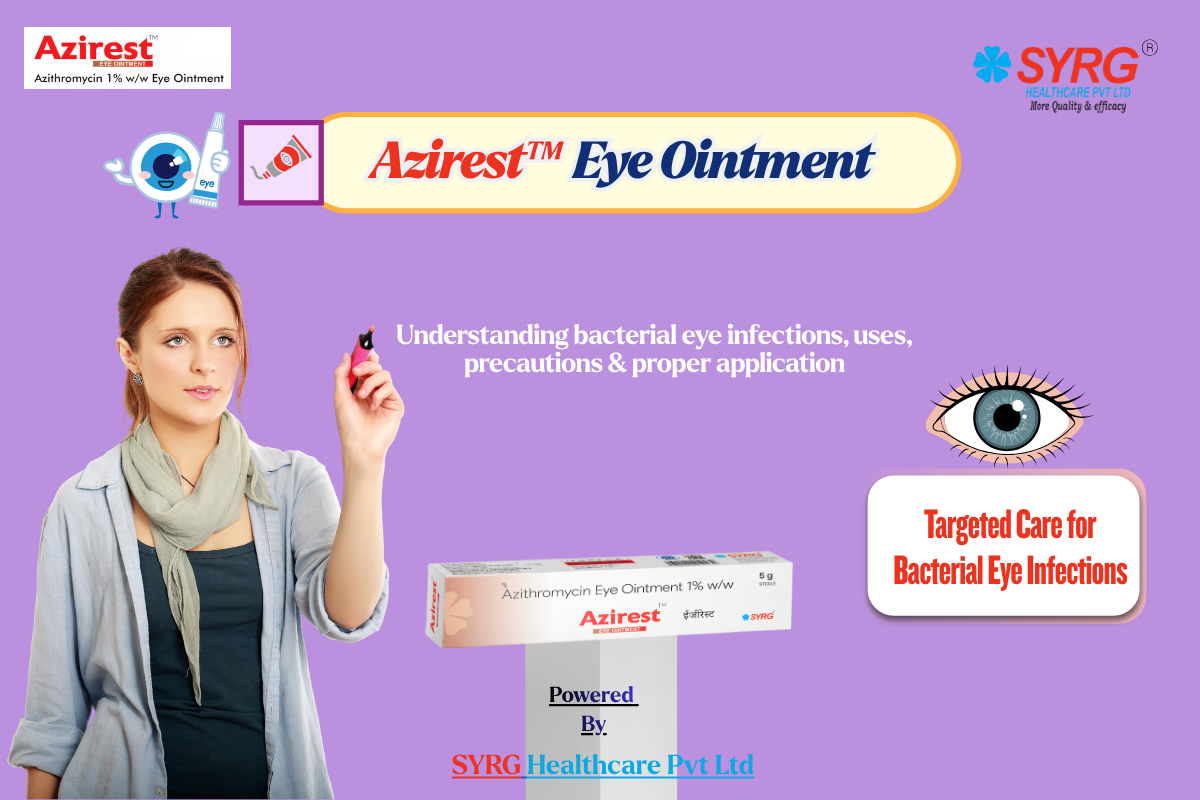
Azirest Eye Ointment Understanding Its Uses and Features
What Is a Bacterial Eye Infection?
.png)
A bacterial eye infection occurs when susceptible bacteria infect tissues of the eye or surrounding structures. Depending on the area affected, the infection may present as bacterial conjunctivitis, blepharitis, or blepharoconjunctivitis.
Common symptoms may include:
- Redness of the eye
- Eye discharge
- Crusting around the eyelids
- Irritation or burning sensation
- Swelling around the eye or eyelids
- Excessive watering
- Discomfort
However, redness or discharge does not always mean that an infection is bacterial. Viral and allergic eye conditions can produce similar symptoms. Therefore, appropriate evaluation by an eye-care professional is important before starting an antibiotic. Antibiotics should be used when a bacterial infection is suspected or diagnosed and according to professional advice.
What Is Azirest™ Eye Ointment?
.png)
Azirest™ Eye Ointment is an ophthalmic antibiotic ointment containing Azithromycin 1% w/w.
Composition
Each gram contains:
- Azithromycin Dihydrate IP equivalent to Azithromycin anhydrous – 1.0% w/w
- Sterile ointment base – q.s.
According to SYRG Healthcare's product information, Azirest™ is indicated for bacterial conjunctivitis, bacterial eyelid infection (blepharitis), blepharoconjunctivitis, and other external ocular bacterial infections as advised by an ophthalmologist.
Azithromycin belongs to the macrolide class of antibiotics and works by interfering with bacterial protein synthesis, thereby inhibiting the growth of susceptible bacteria.
How Does Azithromycin Eye Ointment Work?
.png)
Azithromycin is an antibacterial medicine that acts against susceptible bacteria responsible for certain ocular infections.
By interfering with bacterial protein production, azithromycin helps prevent susceptible bacteria from growing and multiplying. This antibacterial action can help control the infection and support improvement in infection-related symptoms.
The effectiveness of an antibiotic depends on whether the bacteria causing the infection are susceptible to that antibiotic. Therefore, Azithromycin Eye Ointment should not be considered appropriate for every type of red or irritated eye.
What Are the Uses of Azirest™ Eye Ointment?
.png)
Azirest™ Eye Ointment may be used, under the direction of an ophthalmologist, for susceptible bacterial infections such as:
1. Bacterial Conjunctivitis
Bacterial conjunctivitis, commonly called bacterial "pink eye," can cause redness, discharge, irritation, and crusting around the eyelids.
Azithromycin is an established topical macrolide antibiotic used for bacterial conjunctivitis caused by susceptible organisms.
2. Bacterial Blepharitis
Blepharitis refers to inflammation affecting the eyelid margins. When bacteria contribute to the condition, an ophthalmologist may recommend an appropriate topical antibiotic as part of treatment.
3. Blepharoconjunctivitis
When inflammation or infection involves both the eyelids and conjunctiva, it may be described as blepharoconjunctivitis. Treatment depends on the underlying cause and clinical assessment.
4. External Ocular Bacterial Infections
Azirest™ is indicated by SYRG Healthcare for external ocular bacterial infections caused by susceptible organisms, as advised by an ophthalmologist.
5. Bacterial Infection Management After Minor Eye Procedures
In selected situations, an ophthalmologist may prescribe an ophthalmic antibiotic around a minor eye procedure when bacterial infection prevention or treatment is clinically appropriate. Such use should be strictly based on the treating eye specialist's recommendation.
Common Symptoms That May Accompany Bacterial Eye Infections
.png)
Some symptoms that may occur with bacterial eye infections include:
- Red or pink appearance of the eye
- Yellowish or whitish discharge
- Eyelashes sticking together
- Crusting, particularly after sleep
- Eyelid swelling
- Irritation or discomfort
- Excessive watering
- Sensitivity or discomfort around the eye
It is important to remember that these symptoms can overlap with viral, allergic, inflammatory, or other eye conditions. A proper diagnosis helps determine whether an antibiotic is appropriate.
How to Use Azirest™ Eye Ointment
.png)
Always use Azirest™ Eye Ointment exactly as directed by your ophthalmologist.
The general application technique for an ophthalmic ointment includes:
- Wash your hands thoroughly before application.
- Tilt your head slightly backward.
- Gently pull down the lower eyelid to create a small pocket.
- Apply the prescribed amount of ointment into the lower eyelid pocket.
- Close the eye gently for a short period.
- Avoid touching the tip of the tube against the eye, eyelashes, fingers, or other surfaces.
- Replace the cap securely after use.
- Wash your hands again after application if required.
SYRG Healthcare specifically advises avoiding contact between the ointment tube tip and the eye or other surfaces to reduce contamination.
Important
The dose and duration should be determined by the prescribing ophthalmologist. Do not change the frequency or duration of treatment on your own.
Why Is Proper Application Important?
Eye ointments need to be applied carefully because the eye is highly sensitive and easily exposed to contamination.
Incorrect application can:
- Contaminate the tube
- Increase the risk of introducing microorganisms
- Cause unnecessary irritation
- Make application less effective
Maintaining good hand hygiene and keeping the tube tip clean are therefore essential.
Important Precautions While Using Azirest™
.png)
Use Only Under Medical Advice
Azithromycin is an antibiotic. It should be used for appropriate bacterial infections rather than for every episode of eye redness or irritation.
Do Not Share Your Eye Ointment
Never share an ophthalmic ointment tube with another person, even if they have similar symptoms.
Avoid Contaminating the Tube
Do not allow the tip of the tube to touch the eye, eyelashes, fingers, or other surfaces.
Contact Lens Users Should Take Care
People with signs or symptoms of bacterial conjunctivitis should avoid wearing contact lenses during the active infection. This precaution is also included in FDA prescribing information for topical azithromycin ophthalmic therapy.
Complete the Prescribed Treatment
Do not stop or extend antibiotic treatment without consulting your ophthalmologist. Unnecessary or prolonged antibiotic exposure can contribute to antimicrobial resistance.
When Should You See an Ophthalmologist?
Seek professional eye care if:
- Eye pain is severe
- Vision becomes blurred or decreases
- Redness is rapidly worsening
- There is significant swelling
- Discharge becomes excessive
- Symptoms do not improve as expected
- You develop a marked reaction after using the medicine
- You have an eye injury along with redness or discomfort
- You are unsure whether the infection is bacterial
Some serious eye conditions can initially resemble simple conjunctivitis, so persistent or severe symptoms should not be self-treated.
Antibiotic Eye Ointment vs. Eye Drops: What's the Difference?
Both eye drops and ointments can be prescribed for ocular infections, but they have different formulations and application characteristics.
Eye drops are liquid formulations that are generally convenient during the daytime.
Eye ointments are semi-solid preparations that remain in contact with the ocular surface for longer and may temporarily blur vision after application.
The choice between an eye drop and ointment depends on the patient's condition, the medicine prescribed, the formulation, and the ophthalmologist's clinical judgment.
Why Antibiotic Stewardship Matters in Eye Care
Antibiotics are valuable medicines, but they should be used responsibly.
Using antibiotics unnecessarily, using the wrong antibiotic, or using them for longer than necessary may contribute to the development of resistant microorganisms. Official prescribing information for topical azithromycin warns that prolonged use can allow resistant organisms to grow.
Therefore:
Right diagnosis + Right antibiotic + Right duration = Responsible eye care
Never use leftover antibiotic eye medicines simply because the symptoms look similar to a previous infection.
Azirest™ Eye Ointment: A Closer Look
.png)
| Feature | Azirest™ Eye Ointment |
|---|---|
| Active ingredient | Azithromycin |
| Strength | 1% w/w |
| Formulation | Sterile ophthalmic ointment |
| Therapeutic category | Ophthalmic antibiotic |
| Main indication | Susceptible bacterial eye infections |
| Key applications | Bacterial conjunctivitis, blepharitis and blepharoconjunctivitis |
| Manufacturer | SYRG Healthcare Pvt. Ltd. |
The product composition and indications above are based on SYRG Healthcare's published product information.
Frequently Asked Questions About Azirest™ Eye Ointment
1. What is Azirest™ Eye Ointment used for?
Azirest™ Eye Ointment contains Azithromycin 1% w/w and is indicated for susceptible bacterial eye infections, including bacterial conjunctivitis, blepharitis, blepharoconjunctivitis, and other external ocular bacterial infections as advised by an ophthalmologist.
2. Is Azirest™ Eye Ointment an antibiotic?
Yes. Azirest™ contains azithromycin, a macrolide antibiotic used topically in ophthalmic treatment of susceptible bacterial infections.
3. Can Azirest™ be used for every type of red eye?
No. Red eye can have several causes, including bacterial infection, viral infection, allergy, dryness, inflammation, or injury. An ophthalmologist should determine whether an antibiotic is appropriate.
4. Can Azirest™ be used for bacterial conjunctivitis?
Azirest™ is indicated by SYRG Healthcare for bacterial conjunctivitis caused by susceptible organisms.
5. Can Azirest™ be used for blepharitis?
Yes, SYRG Healthcare lists bacterial blepharitis among the indications for Azirest™ Eye Ointment.
6. Does Azirest™ cause blurred vision?
Temporary blurred vision may occur immediately after applying an eye ointment because of the ointment's formulation. If vision changes are persistent or concerning, consult an eye doctor.
7. Can I wear contact lenses while using Azirest™?
If you have signs or symptoms of bacterial conjunctivitis, contact lenses should not be worn during the active infection. Follow your ophthalmologist's advice regarding when to resume lens use.
8. Can I stop using Azirest™ when my symptoms improve?
Do not change or discontinue the prescribed treatment without consulting your ophthalmologist. Follow the treatment duration recommended by your doctor.
9. Can I share my Azirest™ Eye Ointment with someone who has similar symptoms?
No. Eye infections can have different causes and require different treatments. Sharing medicines can also increase the risk of contamination and inappropriate antibiotic use.
10. Can Azirest™ be used without consulting an eye doctor?
It is best used under the guidance of an ophthalmologist, particularly because not every red or irritated eye is caused by bacteria.
11. What should I do if the tube tip touches my eye?
Avoid touching the tube tip to the eye or other surfaces. If contamination occurs, consult your pharmacist or eye-care professional for advice regarding safe continued use.
12. When should I seek immediate eye-care advice?
Severe eye pain, significant swelling, worsening redness or discharge, vision changes, or a suspected allergic reaction warrants prompt medical evaluation.
Final Takeaway:
.png)
Bacterial eye infections can cause considerable discomfort, but timely diagnosis and appropriate treatment can help manage the infection effectively. Azirest™ Eye Ointment, containing Azithromycin 1% w/w, is an ophthalmic antibiotic from SYRG Healthcare Pvt. Ltd., indicated for susceptible bacterial eye infections including bacterial conjunctivitis and bacterial blepharitis.
The key to responsible eye care is not simply treating redness or discharge—it is identifying the underlying cause and choosing the appropriate treatment under professional guidance.
If Azirest™ Eye Ointment has been prescribed for you, use it exactly as directed, maintain good eye and hand hygiene, avoid contaminating the tube, and complete the prescribed course.
Healthy eyes deserve the right care, at the right time, with the right treatment.
About SYRG Healthcare Pvt. Ltd.
SYRG Healthcare Pvt. Ltd. is engaged in the ophthalmic healthcare space and offers a range of eye-care products across categories including lubricants, antibiotics and combination products, steroids and anti-allergics, NSAIDs, myopia products, ARMD/antioxidant products, and eyelid-care products.
For product information, please refer to the official Azirest™ Eye Ointment product page from SYRG Healthcare.
Medical Disclaimer: This article is intended for general educational and informational purposes. It does not replace diagnosis, prescription, or advice from a qualified ophthalmologist. Antibiotic eye medicines should be used according to the advice of a healthcare professional.